

Illusion Pictures: How Images Trick the Eye
Illusion Pictures: How Images Trick the Eye
Illusion pictures can make straight lines seem crooked, still shapes appear to move, or one image reveal two different scenes. They are entertaining to look at, but they also offer a glimpse into how the brain makes sense of what the eyes see.
What is an illusion picture?
An illusion picture is an image that can be interpreted in a way that differs from the physical details on the page or screen. The eyes collect visual information, while the brain organises it into familiar shapes, patterns, depth and movement. In some pictures, carefully arranged colours, lines, shadows or repeated patterns lead the brain towards an unexpected interpretation.
The image itself is not necessarily changing. Instead, the way it is perceived may shift as the brain focuses on different details or applies a different interpretation.
Common types of visual illusions
Ambiguous pictures
Ambiguous pictures can be seen in more than one way. A famous example is an image that appears to show either a vase or two faces in profile. The outlines stay the same, but attention can switch between the two possible interpretations.
Geometric illusions
These pictures use lines, angles and surrounding shapes to affect how distances or dimensions appear. Two lines of equal length might seem unequal when they have different patterns around them. The surrounding context can influence how the brain judges each line.
Illusions of movement
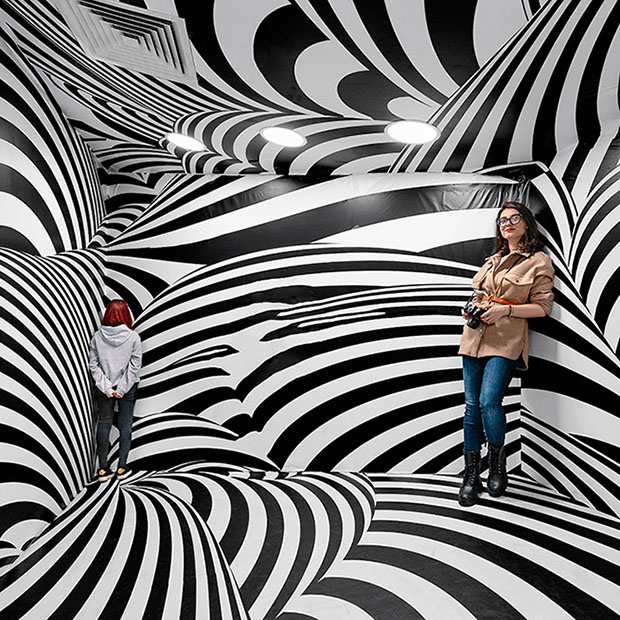
Some still images seem to shimmer, spin or ripple when viewed normally. Repeating patterns, contrasting colours and small changes in brightness can create a sense of movement. The picture remains still, but the visual system responds to its details in a way that can make it appear dynamic.
Impossible objects
Impossible-object pictures depict structures that look convincing in individual sections but cannot exist as a single, coherent object in three-dimensional space. Their unusual joins and perspectives may be easier to accept at first glance than when examined closely.
Hidden images
Some illusion pictures contain a second image concealed within a larger scene. It may take a moment to spot a face in a pattern, an animal among branches or a shape formed by the spaces between objects. Changing the point of focus can make the hidden image easier to notice.
Why do illusion pictures work?
The brain does not simply record every visual detail like a camera. It rapidly interprets incoming information, drawing on contrast, perspective, previous experience and assumptions about how objects are arranged. This helps people make sense of a busy world quickly, but it can also lead to surprising results when an image is designed to take advantage of those processes.
For instance, the brain often uses shading and perspective as clues about depth. An artist can arrange these clues in an unusual way, making a flat picture seem three-dimensional. Similarly, a pattern may encourage the eyes to follow a particular direction, which can make an otherwise motionless image appear to move.
How to look at illusion pictures
- Look at the picture from a comfortable distance, then move a little closer or further away.
- Focus on one detail at a time, such as an outline, a corner or a patch of colour.
- Try looking at the image from the edge of your vision rather than staring directly at it.
- For an ambiguous picture, relax your gaze and see whether another interpretation appears.
- Take a short break if an image feels uncomfortable or causes eye strain.
There is no guarantee that everyone will see an illusion in the same way. Lighting, screen size, eyesight and individual experience can all affect how an image appears. Some illusions may also take practice to recognise.
More than a visual puzzle
Illusion pictures are a playful way to explore perception. They can be used in art, design and education to prompt questions about perspective, attention and the relationship between what is seen and what is understood. Whether they make a shape appear to move or reveal a hidden scene, their appeal lies in that moment when an image suddenly looks different.
Next time a picture seems impossible, take a closer look. The answer may be hiding in the lines, patterns or assumptions that guide the way it is seen.
Mastering Illusion Pictures: Top 5 Tips for Unveiling Hidden Details
- Look at the picture from different angles.
- Focus on one detail at a time.
- Step back to reveal hidden shapes.
- Blink or look away, then try again.
- Compare what you see with someone else.
Look at the picture from different angles.
Try looking at an illusion picture from different angles to see how your perception changes. Tilt the page or screen, or view it from slightly above or below. A new angle can make hidden shapes easier to spot, change how depth appears or reveal why a pattern seems to move. The image itself stays the same, but shifting your viewpoint may lead your brain to interpret it differently.
Focus on one detail at a time.
Focus on one detail at a time when looking at an illusion picture. Choose a particular line, shape or patch of colour and notice how it relates to the rest of the image. Then shift your attention to another area. This can help you spot hidden forms, understand how the illusion is created or see the picture in a completely different way.
Step back to reveal hidden shapes.
If an illusion picture seems to be a jumble of colours or patterns, try stepping back a little. From further away, small details blend together and hidden shapes, faces or objects may become easier to recognise. You can also view the image as a thumbnail or gently narrow your eyes to create a similar effect.
Blink or look away, then try again.
If an illusion picture is difficult to make sense of, blink or look away for a moment, then try again. A brief pause can help reset your focus and give your eyes a fresh start. When you return to the image, shift your attention to a different detail or view it from another angle — you may notice a hidden shape or see the illusion in a new way.
Compare what you see with someone else.
Compare what you see with someone else: ask a friend to look at the same illusion picture and describe what they notice. They may spot a hidden shape or interpret the image differently, giving you a fresh perspective. Comparing observations is a fun way to discover how attention and individual perception can change the way an image appears.