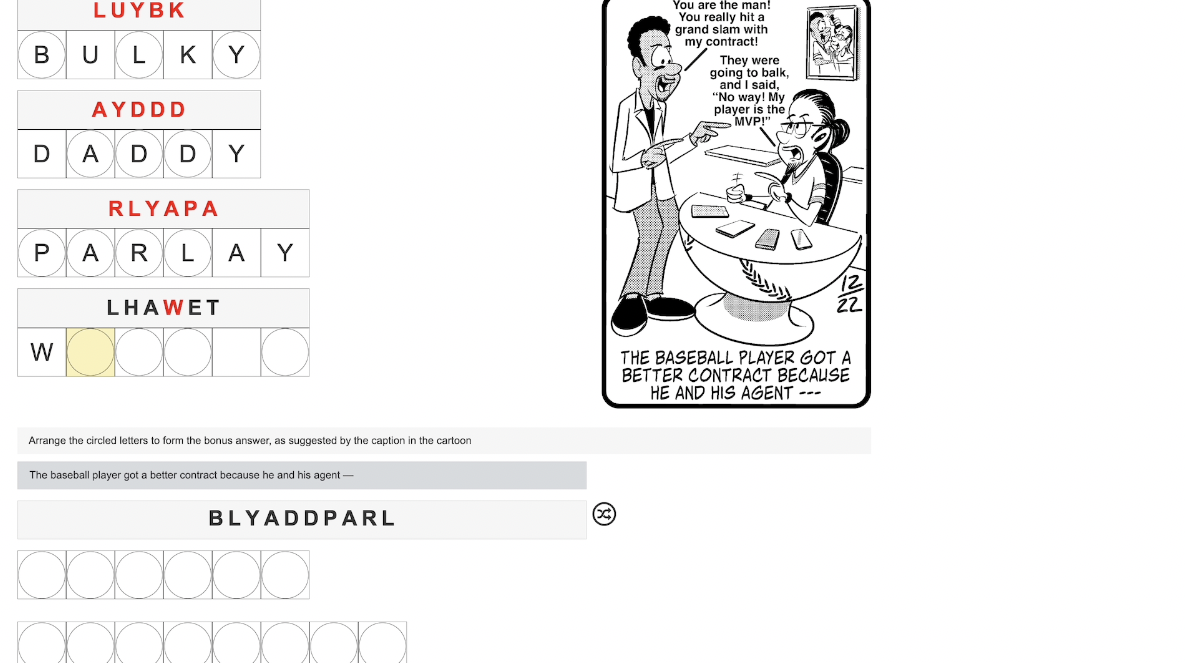
Jumble Word Solve: Tips and Techniques for Finding the Answer
How to Solve Jumbled Words: Practical Tips and Techniques
A jumble word puzzle gives you a set of mixed-up letters and asks you to rearrange them into a word. Some puzzles provide a clue or a theme, while others rely on your vocabulary and powers of observation. Whether you are tackling a quick brain-teaser or a challenging word game, a few simple techniques can make finding the answer easier.
What Is a Jumbled Word?
A jumbled word, sometimes called an anagram, is made by rearranging the letters of another word. For example, the letters “listen” can be rearranged to form “silent”. In a puzzle, you may need to use every letter exactly once, so it helps to keep track of the letters as you work.
Start with the Clue
If the puzzle includes a definition, category or picture, use it to narrow down the possibilities. A clue about fruit, for instance, suggests a different set of answers from one about musical instruments. Think of words that fit the clue before trying to arrange every letter combination.
Look for Common Letter Patterns
Some letters often appear together in English. Look for familiar pairs and combinations such as “th”, “sh”, “ch”, “st” and “ing”. Spotting a likely ending or beginning can quickly reveal the shape of the answer.
Separate Vowels and Consonants
Divide the letters into vowels and consonants, then try placing the vowels between likely consonant groups. This can make possible syllables easier to see. It is also worth checking whether the word might begin or end with a common letter combination, such as “re”, “un”, “ed” or “er”.
Try Different Word Lengths
When a puzzle contains several letters, do not assume the answer will be a familiar long word. It may be a shorter word with unused letters forming another answer, depending on the puzzle’s rules. If the instructions say to use all the letters, check your final answer against the original set to make sure none have been missed or repeated.
Use a Step-by-Step Method
- Read the clue and note the subject or theme.
- Count the letters and identify the vowels.
- Circle familiar pairs or endings within the jumble.
- Say possible combinations aloud; hearing a word can make it easier to recognise.
- Check the spelling and confirm that every supplied letter has been used correctly.
When You Get Stuck
Take a short break and look at the letters again with fresh eyes. You could also write them in a different order, cover part of the puzzle, or work backwards from the clue by listing possible answers. For particularly difficult puzzles, a word list or anagram solver can offer a hint—but trying a few strategies yourself first can make the solution more satisfying.
Why Word Jumbles Are Worth Solving
Jumbled-word puzzles are an enjoyable way to practise spelling, build vocabulary and exercise flexible thinking. They can be solved alone or shared with friends and family, making them a simple activity for a short break or a longer puzzle session.
With practice, you will become quicker at spotting familiar patterns and testing possible answers. The key is to stay patient, use the clues available and remember that a fresh arrangement can reveal a word that was hiding in plain sight.
Mastering Jumble Word Puzzles: 7 Essential Tips for Success
- Look for common letter pairs such as “th” and “ch”.
- Try spotting prefixes and suffixes.
- Separate vowels from consonants.
- Rearrange letters into familiar patterns.
- Check whether a shorter word is hidden inside.
- Use the clue to narrow down possible answers.
- Read your answer aloud to see if it sounds right.
Look for common letter pairs such as “th” and “ch”.
When solving a jumbled word, look for common letter pairs such as “th” and “ch”. These letters often appear together in English, so grouping them can help reveal familiar word patterns and narrow down possible answers. Try placing each pair at the beginning, middle or end of a word, then see which arrangement fits the clue and uses the available letters correctly.
Try spotting prefixes and suffixes.
When solving a jumbled word, look for familiar prefixes and suffixes that may appear at the beginning or end of the answer. Common prefixes such as “un-”, “re-” and “pre-”, and suffixes such as “-ing”, “-ed” and “-ness”, can help you organise the letters and recognise possible word patterns. Once you spot a likely word part, rearrange the remaining letters and check whether they form a word that fits the clue.
Separate vowels from consonants.
Separating vowels from consonants can make a jumbled word easier to solve by helping you spot likely syllables and familiar word patterns. Write the vowels in one group and the consonants in another, then try placing the vowels between consonant pairs or clusters. You might also look for common combinations, such as “th”, “sh” or “ch”, and test whether they could form the start or end of a word. Use the clue, if there is one, to guide your guesses, and check that your final answer uses each letter exactly once.
Rearrange letters into familiar patterns.
When solving a jumbled word, try rearranging the letters into familiar patterns rather than looking at them as one long sequence. Spot common pairs such as “th”, “sh” and “ch”, or endings such as “ing”, “ed” and “er”. Once you recognise a likely combination, arrange the remaining letters around it and check whether they form a word that fits the clue.
Check whether a shorter word is hidden inside.
When a jumble seems tricky, check whether a shorter word is hiding among the letters. Try spotting a familiar combination first, then see whether the remaining letters form another word or help reveal the full answer. This can break the puzzle into manageable parts and make a solution easier to find.
Use the clue to narrow down possible answers.
Use the clue to narrow down the possible answers before rearranging the letters. A definition, topic or picture can point you towards a particular word or category, helping you rule out unlikely options and focus on combinations that make sense. For example, if the clue is about an animal, think of animal names that use the letters in the jumble. This makes solving quicker and less frustrating.
Read your answer aloud to see if it sounds right.
Once you have rearranged the letters, read your answer aloud to see if it sounds right. Hearing the word can help you spot an unlikely combination or recognise a familiar word you may have overlooked. If it sounds awkward, check the letters again and try another arrangement.