

Brain It On Game: A Creative Physics Puzzle Challenge
Brain It On! – A Physics Puzzle Game That Gets You Thinking
Brain It On! is a physics-based puzzle game built around a simple idea: draw shapes on the screen and use them to solve a challenge. The rules are easy to grasp, but finding a clever solution can take plenty of thought, experimentation and a little patience.
How the Game Works
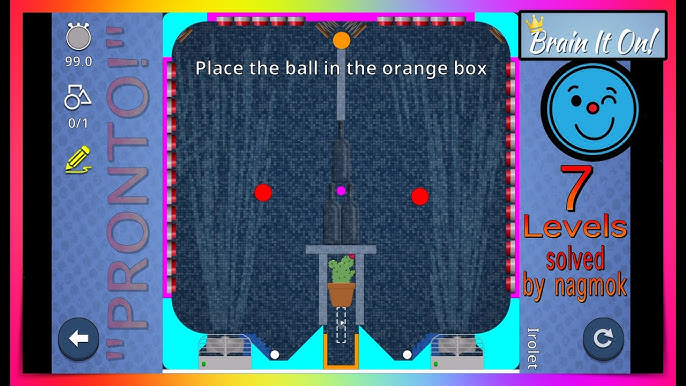
Each level gives you an objective, such as moving an object into a particular area or making two objects touch. You draw shapes with your finger, then watch as they fall, roll, swing or collide according to the game’s physics. A line might become a ramp, a circle could act as a weight, and a larger drawing might push an object across the screen.
There is rarely just one way to complete a puzzle. Instead of following a fixed sequence of moves, you can test different ideas and see how the objects respond. That freedom is a big part of the appeal: a solution that looks unusual may work better than one that seems obvious.
Why It’s Challenging
The puzzles call for more than quick reactions. Players need to think about gravity, balance, momentum and timing, while also considering how the shape they draw will behave. A small change in its size or position can make the difference between success and failure.
When a first attempt does not work, the game encourages trial and error. You can adjust your drawing, rethink the plan and try again. This makes solving a level feel rewarding, especially when a simple idea finally brings all the moving parts together.
A Creative Take on Puzzles
Many puzzle games ask players to choose from a set of available moves. Brain It On! gives you a blank space and lets you create the tools you need. This makes each challenge feel like a small experiment: make a prediction, draw a shape and observe what happens.
The open-ended approach also gives players room to develop their own style. Some may prefer neat, carefully placed shapes; others might try a more elaborate contraption. The best solution is often the one that meets the objective with the least fuss.
Who Might Enjoy It?
Brain It On! is well suited to players who enjoy physics puzzles, creative problem-solving and games that reward persistence. It can be played in short bursts, making it a handy choice when you have a few spare minutes, though a tricky level may tempt you to keep trying for longer.
It may also appeal to anyone who enjoys working out how things move and interact. The game turns basic ideas about forces and motion into playful challenges, without requiring players to know the science in advance.
Final Thoughts
With its straightforward controls and flexible solutions, Brain It On! offers a refreshing twist on the puzzle genre. Its challenges invite players to think creatively, learn from failed attempts and celebrate those satisfying moments when a drawing works exactly as intended. For anyone looking for a game that combines imagination with a bit of brainpower, it is a compelling one to try.
Exploring the Benefits of ‘Brain It On!’: A Creative and Engaging Physics Puzzle Game
- Encourages creative problem-solving
- Easy-to-understand drawing controls
- Offers open-ended solutions
- Makes physics fun to explore
- Provides a satisfying sense of achievement
- Suitable for short play sessions
- Challenges players to think strategically
- Encourages learning through trial and error
- Appeals to puzzle and physics fans
Challenges and Drawbacks of ‘Brain It On!’: Navigating Frustrations, Difficulty, and Disruptions
- Some puzzles can feel frustrating.
- The physics may behave unpredictably.
- Later levels can be quite difficult.
- Repeated attempts may become tedious.
- Hints may not always be helpful.
- Drawing controls can feel imprecise.
- Ads may interrupt play.
Encourages creative problem-solving
Brain It On! encourages creative problem-solving by letting players draw their own shapes to tackle each puzzle. Rather than relying on a single set of moves, you can experiment with different ideas, test how objects react and adapt your approach when a plan does not work. This freedom makes every challenge an opportunity to think in new ways and discover inventive solutions.
Easy-to-understand drawing controls
One of the advantages of Brain It On! is its easy-to-understand drawing controls. Simply draw shapes on the screen to create ramps, weights or other objects that can help solve each puzzle. The controls are straightforward, so players can get started quickly and focus on experimenting with ideas rather than learning complicated commands.
Offers open-ended solutions
One of the biggest strengths of Brain It On! is that its puzzles often have more than one possible solution. Rather than forcing players to follow a fixed set of moves, the game lets them draw their own shapes and experiment with different ideas. A ramp, weight or chain of objects might all help achieve the same goal, encouraging creative thinking and making each successful solution feel personal.
Makes physics fun to explore
One of the best things about Brain It On! is how it makes physics fun to explore. Rather than relying on equations or lengthy explanations, the game lets you experiment with drawn shapes and see how gravity, momentum and collisions affect them. Each attempt offers a chance to test an idea, learn from the result and try a new approach, turning physics into an enjoyable part of solving the puzzle.
Provides a satisfying sense of achievement
One of the most rewarding aspects of Brain It On! is the satisfying sense of achievement it provides. Each puzzle asks you to experiment, rethink your approach and find a solution that works with the game’s physics. When a carefully drawn shape finally does the job, the success feels earned—not simply handed to you. Overcoming a tricky level can make even a small victory feel genuinely satisfying.
Suitable for short play sessions
One of the advantages of Brain It On! is that it suits short play sessions. Each puzzle can be tackled in just a few minutes, making the game easy to enjoy during a break or while waiting. If a level proves tricky, you can pause and return to it later without losing the appeal of finding a solution.
Challenges players to think strategically
One of the key strengths of Brain It On! is the way it challenges players to think strategically. Each puzzle requires careful planning: players must consider where to draw, how their shapes will move and how gravity and momentum might affect the outcome. Testing different approaches helps refine each plan, making every successful solution feel well-earned.
Encourages learning through trial and error
One of the strengths of Brain It On! is that it encourages learning through trial and error. When a drawn shape does not behave as expected, players can rethink their approach, make a small adjustment and try again. Each attempt offers clues about how gravity, momentum and collisions affect the puzzle, helping players develop a better understanding of the game’s physics. Rather than treating mistakes as failures, the game makes them a natural part of discovering a solution.
Appeals to puzzle and physics fans
Brain It On! is a great fit for fans of both puzzles and physics. Each level challenges players to draw shapes and use gravity, momentum and collisions to reach a goal, turning basic physics ideas into playful problems to solve. The freedom to experiment with different designs adds an extra layer of creativity, while the satisfaction of finding a successful solution keeps puzzle lovers coming back for more.
Some puzzles can feel frustrating.
Some puzzles in Brain It On! can feel frustrating, particularly when the solution is not immediately clear or a small mistake causes the whole attempt to fail. Repeatedly adjusting shapes and trying different approaches may test your patience, especially if you are stuck on one level for a while. However, taking a short break and returning with a fresh perspective can often help you spot a new solution.
The physics may behave unpredictably.
One drawback of Brain It On! is that its physics can sometimes behave unpredictably. A shape may bounce, roll or collide in an unexpected way, making a carefully planned solution fail for reasons that are not immediately clear. This can add to the fun of experimenting, but it may also feel frustrating when success depends on trial and error rather than a player’s intended design.
Later levels can be quite difficult.
Later levels in Brain It On! can be quite difficult, with puzzles that demand careful planning, precise drawing and plenty of trial and error. Some challenges may take several attempts to solve, which can be frustrating for players who prefer a more relaxed experience or want to make quick progress.
Repeated attempts may become tedious.
Although repeated attempts are part of the challenge in Brain It On!, they can become tedious when a solution takes many tries. Small changes to a drawing may lead to similar results, and restarting a level repeatedly can interrupt the flow of play. This may frustrate players who prefer steady progress or clearer hints when they get stuck.
Hints may not always be helpful.
One drawback of Brain It On! is that its hints may not always be helpful. They can point players towards a general idea without explaining how to put it into practice, which may leave a tricky puzzle feeling just as confusing as before. For players who are stuck, this can make progress frustrating and encourage more trial and error than they would like.
Drawing controls can feel imprecise.
One drawback of Brain It On! is that the drawing controls can feel imprecise, particularly when a puzzle requires a shape to be placed or sized very carefully. Small differences in a line or curve may affect how objects move, so a solution that seems right can take several attempts to get working. This can be frustrating when the challenge depends more on accurate drawing than on the player’s idea.
Ads may interrupt play.
One drawback of Brain It On! is that adverts may interrupt play, breaking the flow just as you’re concentrating on a tricky puzzle. These interruptions can be frustrating, particularly when you’re keen to retry a level or move straight on to the next challenge.