

Unravelling the Enigmatic Jastrow Illusion
The Fascinating Jastrow Illusion
Named after the American psychologist Joseph Jastrow, the Jastrow illusion is a captivating optical illusion that plays tricks on our perception of size and shape. This intriguing visual phenomenon has fascinated researchers and enthusiasts alike for decades.
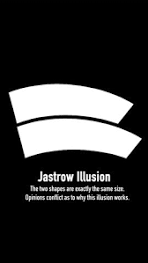
The Jastrow illusion typically involves two identical curved shapes, such as crescents or boomerangs, arranged in a way that creates an illusion of one shape appearing larger than the other, even though they are actually the same size. This distortion in perception can be quite puzzling and highlights the complexities of how our brains interpret visual information.
One of the key factors contributing to the effectiveness of the Jastrow illusion is the positioning of the shapes and the way they interact with each other. Our brains tend to focus on specific areas of an image and make assumptions based on context, leading to misinterpretations of size and proportion.
Studies have shown that even when presented with evidence that disproves the illusion, our brains may still perceive the distorted image as reality. This demonstrates how deeply ingrained these perceptual biases can be and underscores the importance of critical thinking when observing visual stimuli.
From art to psychology to neuroscience, the Jastrow illusion continues to spark interest and intrigue across various disciplines. Its ability to challenge our understanding of perception and reality serves as a reminder of the complexity and wonder of the human mind.
Next time you encounter a Jastrow illusion, take a moment to appreciate the fascinating interplay between vision and cognition that lies at its core. Allow yourself to be captivated by its mystery and marvel at the intricate workings of your own perception.
Exploring the Jastrow Illusion: Answers to Common Questions
- What is the Jastrow illusion?
- Who discovered the Jastrow illusion?
- How does the Jastrow illusion work?
- Why do we perceive the shapes in the Jastrow illusion differently?
- Are the shapes in the Jastrow illusion actually different sizes?
- Can anyone experience the Jastrow illusion?
- What are some examples of the Jastrow illusion in everyday life?
- Is there a scientific explanation for the Jastrow illusion?
- How can understanding the Jastrow illusion benefit us?
What is the Jastrow illusion?
The Jastrow illusion is a compelling optical phenomenon that deceives our perception of size and shape. It involves two identical curved shapes positioned in a way that tricks the brain into perceiving one shape as larger than the other, despite their actual equality in size. This intriguing visual distortion, named after the American psychologist Joseph Jastrow, highlights the intricate ways in which our minds interpret and process visual information. The illusion’s ability to challenge our understanding of reality and cognition makes it a popular subject of curiosity and study across various fields.
Who discovered the Jastrow illusion?
The Jastrow illusion is named after the American psychologist Joseph Jastrow, who discovered this intriguing visual phenomenon. Joseph Jastrow conducted research in the late 19th and early 20th centuries, focusing on perception and optical illusions. His work on the Jastrow illusion, which involves two identical shapes creating a misleading perception of size difference, has since become a classic example in the field of psychology and visual cognition. Jastrow’s contributions to understanding how our brains interpret visual information have left a lasting impact on the study of illusions and human perception.
How does the Jastrow illusion work?
The Jastrow illusion works by exploiting the way our brains process visual information and make assumptions based on context. In this optical illusion, two identical curved shapes are arranged in a specific configuration that tricks our perception into perceiving one shape as larger than the other, even though they are actually the same size. The positioning and relationship between the shapes create a deceptive effect that confuses our sense of size and proportion. This phenomenon highlights the intricate mechanisms of visual perception and how easily our minds can be influenced by subtle cues and patterns. By understanding the underlying principles of the Jastrow illusion, we gain insights into the complexities of human vision and cognition.
Why do we perceive the shapes in the Jastrow illusion differently?
The intriguing aspect of the Jastrow illusion lies in how our brains interpret visual information and perceive the shapes differently. This optical illusion manipulates our perception of size and shape by presenting two identical curved shapes in a way that creates a false impression of one shape appearing larger than the other. The discrepancy in perception can be attributed to how our brains process visual stimuli, focusing on certain elements and making assumptions based on context. Despite knowing that the shapes are actually identical, our minds struggle to reconcile this fact with what we see, highlighting the intricate complexities of human perception and the fascinating ways in which our brains can be deceived by optical illusions like the Jastrow illusion.
Are the shapes in the Jastrow illusion actually different sizes?
One common misconception about the Jastrow illusion is that the shapes presented appear to be different sizes when, in fact, they are identical in size. The clever arrangement and curvature of the shapes create a visual trick that deceives our perception, making one shape seem larger than the other. This optical illusion challenges our innate sense of proportion and highlights how easily our brains can be misled by subtle visual cues. By understanding that the shapes are indeed the same size, we can appreciate the intricacies of how our minds interpret and process visual information.
Can anyone experience the Jastrow illusion?
The Jastrow illusion is a visual phenomenon that can be experienced by virtually anyone, regardless of age or background. This intriguing optical illusion plays on the way our brains interpret shapes and sizes, making it a fascinating subject for individuals interested in perception and cognition. Whether you are a casual observer or a seasoned enthusiast of illusions, the Jastrow illusion offers a captivating insight into the complexities of human vision and how easily our minds can be deceived by cleverly arranged shapes.
What are some examples of the Jastrow illusion in everyday life?
The Jastrow illusion, a well-known optical phenomenon, can be observed in various everyday scenarios that showcase the intriguing nature of visual perception. One common example of the Jastrow illusion in daily life is when observing a pair of identical objects, such as spoons or paper clips, placed in a way that creates the illusion of one object appearing larger than the other. This distortion in size perception challenges our understanding of reality and highlights how our brains can be easily deceived by subtle visual cues. Another instance where the Jastrow illusion may manifest is in certain logo designs or packaging layouts that utilize curved shapes to create a sense of depth or movement, leading viewers to perceive certain elements as larger or smaller than they actually are. These examples demonstrate how the Jastrow illusion continues to intrigue and captivate individuals as they navigate the complexities of visual interpretation in their daily lives.
Is there a scientific explanation for the Jastrow illusion?
The Jastrow illusion, a commonly discussed optical phenomenon, has intrigued researchers and scientists for years. While the exact scientific explanation for the Jastrow illusion may vary depending on the specific context and characteristics of the illusion, it is generally understood to be a result of how our brains process visual information. The distortion in perception caused by the Jastrow illusion can be attributed to factors such as shape, size, orientation, and how our brains interpret these elements in relation to each other. By studying the intricate mechanisms of visual perception and cognitive processing, scientists continue to unravel the mysteries behind illusions like the Jastrow effect, shedding light on the fascinating complexities of human vision and cognition.
How can understanding the Jastrow illusion benefit us?
Understanding the Jastrow illusion can benefit us in several ways. By delving into the mechanisms behind this optical phenomenon, we gain valuable insights into how our brains process visual information and perceive the world around us. This enhanced understanding of perception and cognitive biases can help us develop a keener eye for detail, improve our critical thinking skills, and become more aware of how easily our minds can be deceived by optical illusions. By studying the Jastrow illusion, we not only enrich our knowledge of human psychology but also cultivate a greater appreciation for the complexities of visual perception, ultimately leading to a more discerning and insightful approach to interpreting the world.