

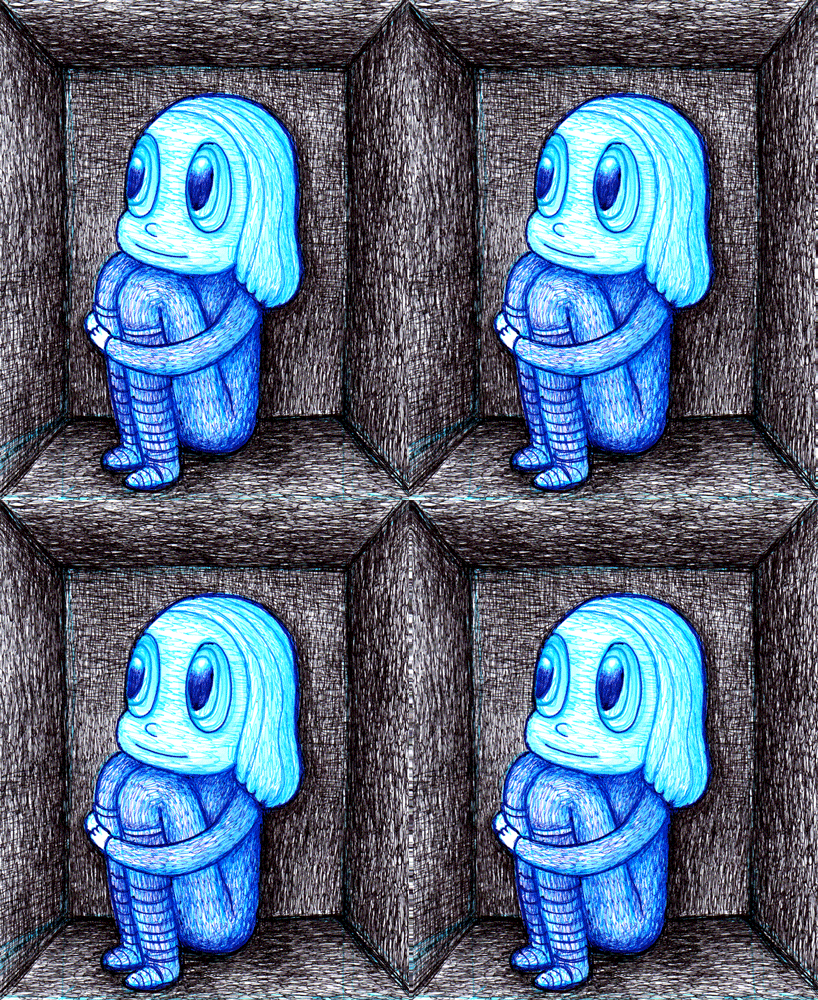
Unlocking the Secrets of Depth Illusion: A Journey into Visual Perception
The Fascinating World of Depth Illusions
Depth illusions, also known as depth perception illusions, are captivating visual phenomena that trick our brains into perceiving depth where there is none. These illusions play with our perception of space, making flat images appear three-dimensional and creating a sense of depth that defies reality.
One popular type of depth illusion is the Ames Room illusion, where a specially constructed room distorts the size and shape of objects within it to create the illusion that people or objects are changing in size as they move across the room. This clever manipulation of perspective challenges our understanding of space and depth.
Another well-known depth illusion is the Ponzo illusion, where two identical lines appear to be different lengths when placed between converging lines. This optical trickery exploits our brain’s tendency to interpret visual cues based on context and relative size, leading to a compelling illusion of depth.
Depth illusions are not only entertaining but also offer valuable insights into how our brains process visual information. By studying these illusions, researchers can gain a deeper understanding of human perception and cognition, shedding light on the complex mechanisms that govern how we see and interpret the world around us.
Whether created through clever design, perspective tricks, or artistic techniques, depth illusions continue to amaze and intrigue audiences of all ages. The next time you encounter a visually stunning image that seems to defy logic, take a moment to appreciate the magic of depth illusions and marvel at the wonders of human perception.
Exploring the Benefits of Depth Illusion: Engaging, Enhancing, and Inspiring Visual Perception
- Engages and entertains the viewer with visually captivating effects.
- Enhances artistic creations by adding depth and dimension to flat images.
- Provides valuable insights into human perception and cognitive processes.
- Encourages creative thinking and experimentation in visual design.
- Creates a sense of wonder and amazement through optical trickery.
Challenges and Limitations of Depth Illusions: Confusion, Disorientation, and Visual Fatigue
- Depth illusions can sometimes cause confusion and misinterpretation of spatial relationships in real-world settings.
- Individuals with certain visual impairments or depth perception issues may find depth illusions disorienting or difficult to perceive.
- Overreliance on depth illusions in design or art can lead to a lack of clarity and coherence in conveying intended messages or concepts.
- Excessive exposure to complex depth illusions may cause eye strain or visual fatigue, particularly for sensitive individuals.
Engages and entertains the viewer with visually captivating effects.
Depth illusions engage and entertain the viewer with visually captivating effects that spark curiosity and wonder. By creating the illusion of depth in two-dimensional images, these optical tricks draw the viewer into a world of visual intrigue, where flat surfaces come alive with dimension and movement. The mesmerising nature of depth illusions captivates audiences of all ages, offering a delightful escape into a realm where perception is challenged and imagination is sparked. Whether through intricate designs, clever perspectives, or artistic mastery, depth illusions provide a source of endless fascination and entertainment for those who seek to explore the boundaries of visual perception.
Enhances artistic creations by adding depth and dimension to flat images.
Depth illusions offer a valuable pro by enhancing artistic creations with the illusion of depth and dimension in flat images. By incorporating techniques that create a sense of spatial depth, artists can elevate their work to new levels of visual impact and realism. This added dimension not only captivates viewers but also allows artists to explore creative possibilities that transcend the limitations of traditional two-dimensional art forms. Depth illusions provide a powerful tool for artists to infuse their creations with depth, complexity, and a sense of immersive realism that engages audiences on a deeper level.
Provides valuable insights into human perception and cognitive processes.
Depth illusions offer a fascinating glimpse into the intricate workings of human perception and cognitive processes. By studying how our brains interpret visual cues to create the illusion of depth where there is none, researchers can gain valuable insights into the complex mechanisms that govern our understanding of space and dimension. These illusions not only entertain and captivate us but also serve as a window into the inner workings of the human mind, helping us unravel the mysteries of perception and cognition.
Encourages creative thinking and experimentation in visual design.
Depth illusions offer a unique pro by encouraging creative thinking and experimentation in visual design. By exploring techniques that manipulate perception of depth, designers are challenged to think outside the box and push the boundaries of traditional design concepts. This encourages them to experiment with different visual elements, such as perspective, shading, and composition, in order to create captivating illusions that engage and intrigue viewers. Ultimately, depth illusions inspire designers to think creatively and innovatively, leading to the development of visually striking and thought-provoking artwork that captivates audiences.
Creates a sense of wonder and amazement through optical trickery.
Depth illusions have the remarkable ability to evoke a sense of wonder and amazement by captivating viewers with their optical trickery. By playing with our perception of depth and space, these illusions create a mesmerising experience that challenges our understanding of reality. The awe-inspiring effect of depth illusions leaves observers in a state of fascination, prompting them to question the limits of human vision and the power of visual deception.
Depth illusions can sometimes cause confusion and misinterpretation of spatial relationships in real-world settings.
Depth illusions, while mesmerising and intriguing, can occasionally lead to confusion and misinterpretation of spatial relationships in actual environments. When our perception is altered by these illusions, it can be challenging to accurately judge distances or sizes in the physical world. This discrepancy between what we see and what is real may result in misunderstandings or miscalculations, highlighting the potential downside of relying solely on visual cues influenced by depth illusions in practical situations.
Individuals with certain visual impairments or depth perception issues may find depth illusions disorienting or difficult to perceive.
Individuals with certain visual impairments or depth perception issues may encounter challenges when experiencing depth illusions. The intricate visual tricks that create the illusion of depth can be disorienting or difficult to perceive for those with specific vision conditions. In such cases, the complexities of depth illusions may not be fully appreciated, highlighting the importance of considering diverse visual abilities and perspectives when exploring these captivating phenomena.
Overreliance on depth illusions in design or art can lead to a lack of clarity and coherence in conveying intended messages or concepts.
Overreliance on depth illusions in design or art can pose a significant con by potentially undermining the clarity and coherence of conveying intended messages or concepts. While depth illusions can add visual interest and intrigue to creative works, an excessive use of such techniques may overshadow the core message or concept being communicated. When viewers are too focused on deciphering the illusions, they may lose sight of the intended meaning or purpose behind the artwork or design. Striking a balance between incorporating depth illusions and maintaining clarity in conveying messages is essential to ensure that the artistic or design intent is effectively communicated to the audience.
Excessive exposure to complex depth illusions may cause eye strain or visual fatigue, particularly for sensitive individuals.
Excessive exposure to complex depth illusions can lead to eye strain or visual fatigue, especially for individuals with heightened sensitivity. The intricate patterns and deceptive depth cues in these illusions can put a strain on the eyes as they work harder to make sense of the conflicting visual information. It is important for individuals, especially those prone to eye discomfort, to take breaks and limit their exposure to intense depth illusions to prevent potential discomfort and preserve visual comfort.