

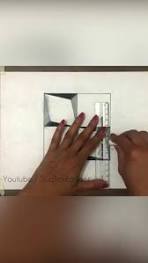
Unveiling the Enchanting World of 3D Illusions
The Fascinating World of 3D Illusions
3D illusions, also known as three-dimensional illusions, are captivating visual phenomena that create the illusion of depth and dimension on a flat surface. These optical illusions trick our brains into perceiving an image as if it has volume and is coming to life right before our eyes.
One of the most popular forms of 3D illusions is stereograms, which are images that appear to be random patterns or shapes but reveal a hidden three-dimensional image when viewed in a specific way. By focusing their eyes in a particular manner, viewers can unlock the hidden depth within these seemingly flat pictures.
Another type of 3D illusion is anamorphic art, where distorted images are painted or drawn in such a way that they only appear three-dimensional when viewed from a certain angle or through a reflective device. Artists use perspective and distortion techniques to create mind-bending artworks that challenge our perception of reality.
With advancements in technology, digital media has also embraced the world of 3D illusions through virtual reality (VR) and augmented reality (AR) experiences. These immersive technologies allow users to interact with three-dimensional illusions in a dynamic and engaging way, blurring the lines between the virtual and physical worlds.
Whether experienced through traditional art forms or cutting-edge digital platforms, 3D illusions continue to captivate audiences around the globe with their ability to defy expectations and spark wonder. The mesmerising blend of artistry and science behind these illusions serves as a reminder of the boundless creativity that human imagination can achieve.
Mastering 3D Illusions: 9 Essential Tips for Creating Depth and Realism
- Start with simple shapes to understand the basics of 3D illusion.
- Use shading and shadows to add depth and realism.
- Incorporate perspective lines to guide the viewer’s eye.
- Experiment with different angles for a more dynamic effect.
- Utilise contrasting colours to enhance the illusion of depth.
- Practice using light sources from various directions.
- Study real-life objects to improve your understanding of form and structure.
- Layer elements in your composition for added complexity.
- Keep practising regularly to refine your skills in creating 3D illusions.
Start with simple shapes to understand the basics of 3D illusion.
To grasp the fundamentals of creating 3D illusions, it is advisable to begin with simple shapes. By starting with basic geometric forms such as cubes, spheres, or pyramids, individuals can gradually familiarise themselves with the principles of depth perception and spatial manipulation. Mastering these foundational elements lays a solid groundwork for advancing to more intricate 3D illusions, enabling creators to hone their skills and develop a deeper understanding of how to effectively convey three-dimensional effects in their artwork or designs.
Use shading and shadows to add depth and realism.
To enhance the realism and depth of a 3D illusion, incorporating shading and shadows is crucial. By strategically applying light and dark tones to different parts of the image, artists can create the illusion of depth, volume, and dimension. Shadows cast by objects within the illusion help to anchor them in space and give the impression of solidity. The careful manipulation of shading techniques not only adds a sense of realism but also guides the viewer’s eye to perceive the intended three-dimensional effect more effectively. Mastering the art of shading and shadows is key to elevating a 3D illusion from a flat image to a visually striking and immersive experience.
Incorporate perspective lines to guide the viewer’s eye.
To enhance the impact of a 3D illusion, incorporating perspective lines can be a powerful technique to guide the viewer’s eye and create a sense of depth within the artwork. By strategically placing these lines to converge towards a vanishing point, artists can manipulate the perception of distance and scale, leading the viewer on a visual journey that adds realism and intrigue to the illusion. The careful use of perspective lines not only directs attention but also enhances the overall immersive experience, allowing viewers to navigate through the illusion with a heightened sense of wonder and discovery.
Experiment with different angles for a more dynamic effect.
To enhance the impact of a 3D illusion, it is recommended to experiment with various viewing angles. By exploring different perspectives, viewers can unlock a more dynamic and immersive effect, allowing them to appreciate the depth and intricacies of the illusion from multiple vantage points. Adjusting the angle of observation can reveal hidden details, create new dimensions, and provide a fresh visual experience that adds depth and excitement to the overall perception of the artwork or image.
Utilise contrasting colours to enhance the illusion of depth.
When creating a 3D illusion, it is essential to utilise contrasting colours strategically to enhance the perception of depth. By incorporating colours that stand out from each other, such as light and dark shades or complementary hues, artists can create a visual contrast that tricks the eye into perceiving greater dimensionality within the artwork. This technique not only adds vibrancy and interest to the illusion but also reinforces the sense of depth, making the viewer’s experience even more immersive and captivating.
Practice using light sources from various directions.
To enhance your mastery of 3D illusions, it is beneficial to practice utilising light sources from different directions. Experimenting with varying angles and intensities of light can significantly impact the perception of depth and dimension in your illusions. By understanding how light interacts with your artwork, you can create more realistic and immersive visual effects that truly bring your creations to life.
Study real-life objects to improve your understanding of form and structure.
To enhance your grasp of form and structure in creating 3D illusions, it is beneficial to study real-life objects closely. Observing the intricate details, shadows, and perspectives of tangible items can provide valuable insights into how light interacts with surfaces to convey depth and dimension. By immersing yourself in the physical world and analysing the nuances of different shapes and textures, you can refine your ability to replicate realistic three-dimensional effects in your artistic endeavours.
Layer elements in your composition for added complexity.
To enhance the impact of your 3D illusion, consider layering elements within your composition to introduce added complexity. By strategically arranging objects at different depths and distances, you can create a sense of depth and dimension that elevates the overall visual effect. This technique not only increases the realism of the illusion but also engages viewers by inviting them to explore and decipher the intricate layers within the artwork. Experimenting with layering can unlock new creative possibilities and transform your 3D compositions into immersive experiences that captivate and intrigue observers.
Keep practising regularly to refine your skills in creating 3D illusions.
Consistent practice is key to honing your skills in crafting captivating 3D illusions. By dedicating regular time and effort to experimenting with different techniques and refining your artistic abilities, you can enhance your proficiency in creating mesmerising visual effects that defy conventional perception. Embracing a routine of practice not only sharpens your eye for detail and depth but also allows for continuous growth and innovation in the realm of 3D illusion artistry.